
 October 2026 | Ruth Freeman
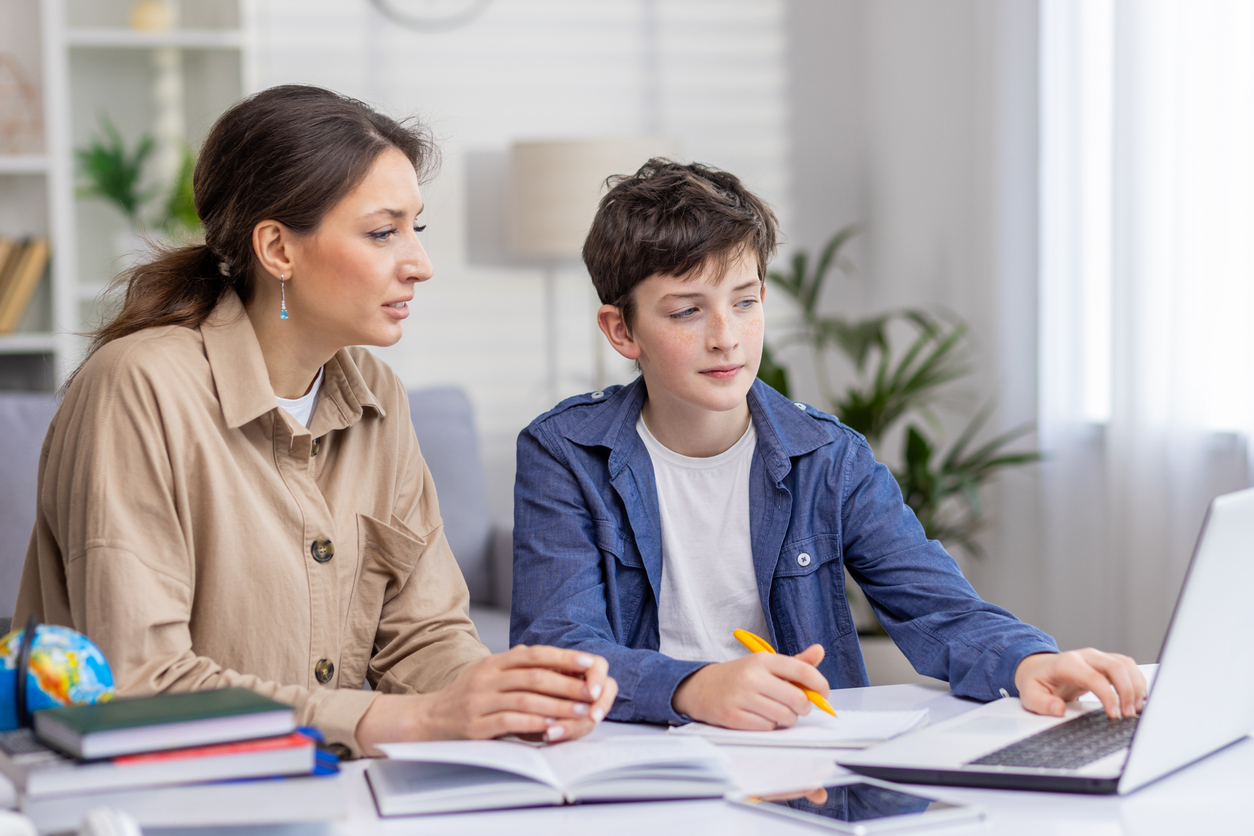
Every teacher knows the difference. Some students arrive settled and ready to engage. Others come in scanning the room, wondering whether their friends are still upset, whether the teacher likes them, or what they missed online last night. Some may arrive just stressed from conflict at home or anticipating conflict for a wide range of reasons. Those students often have little energy left for learning because they’re busy trying to be accepted.
Developmental psychologist Gordon Neufeld calls what the settled students have “rest.” In Hold On to Your Kids, he and Gabor Maté describe how children who can depend on a calm, caring adult at home don’t have to work for that connection. Their energy is free to go toward growing, becoming more independent, and learning. Children without that connection often look for it in peer approval or on their screens, which can stand in for real connection without ever satisfying it. Parents who understand this, and who know how to be their child’s calm center, send their children to school more open to their teachers and less distracted by worries about belonging.
Schools need that kind of partnership now. In the CDC’s 2023 Youth Risk Behavior Survey, 40 percent of high school students reported persistent sadness or hopelessness. In a spring 2024 national survey, 58 percent of public schools said more students were seeking mental health services, and only 48 percent felt able to help every student who needed it.
What the Research Tells Us
Research tells us that learning grows out of relationships. The Center on the Developing Child at Harvard describes “serve and return,” the daily back-and-forth between a child and a caring adult, as the foundation of the attention and emotional regulation children need to learn.
The evidence on families and school success is consistent. Anne Henderson and Karen Mapp found that students with engaged families, whatever their income or background, are more likely to earn higher grades, attend regularly, and show better behavior and social skills. A 2023 CDC analysis found that high school students whose parents generally knew where they were and who they were with had a 30 percent lower prevalence of persistent sadness and about a 60 percent lower prevalence of suicide attempts. And in a randomized trial of Conjoint Behavioral Consultation, students improved more when parents and teachers worked as partners, partly because the relationship between them got stronger.
Why Parents Fall Through the Cracks
Educators already know families matter. What teachers don’t have is time. They can’t run a parenting course on top of instruction, counselors are stretched thin, and many working parents can’t come to an evening workshop. So families get a flyer or a referral list, and that’s rarely enough to change what happens at home.
Support That Fits Real Life
Parent support works best when it adds nothing to a teacher’s workload and lets parents learn whenever they can, from their phone in the pickup line or after the kids are asleep. It also works best when it’s specific. A counselor can send a parent the exact workshop on morning anxiety, or a teacher can share a short video on talking about a hard day. A 2017 study by Beth Russell and colleagues found that even a single live virtual parenting session reduced parents’ acceptance of hostile parenting.
At Peace at Home, our library of workshops and short videos is built for exactly this. Schools don’t need to build a parent program from scratch, and teachers don’t need to become parenting experts.
The Opportunity
When parents are equipped to be their child’s calm center at home, children don’t have to spend the school day working for acceptance. They can spend it learning. Supporting families isn’t a detour from a school’s mission. It’s part of how children thrive.
Learn more about Peace at Home’s solutions for K-12 Schools. Reach out and let’s talk: Solutions@Peaceathomearenting.com

Every college and university supports two groups of parents: the parents of your students, who often get the 2 a.m. phone call before anyone on campus does, and...
October 25 , 2026
Your employees don't stop being parents when they log on. In a new Pew Research Center survey, 46% of full-time working parents said that in the past year they...
October 25 , 2026
Every teacher knows the difference. Some students arrive settled and ready to engage. Others come in scanning the room, wondering whether their friends are stil...
October 19 , 2026
There are 168 hours in a week. A child in therapy might spend one of them with a clinician. Most of the other 167 belong to the parents and caregivers who drive...
October 05 , 2026
Post-pandemic family life has been dramatically impacted by the perfect storm of working parent burnout in combination with our national pediatric mental health...
May 20 , 2026
Every day, educators, mental health clinicians, and family service professionals dedicate themselves to helping children thrive. Teachers support academic growt...
March 24 , 2026