
 October 2026 | Aaron Weintraub
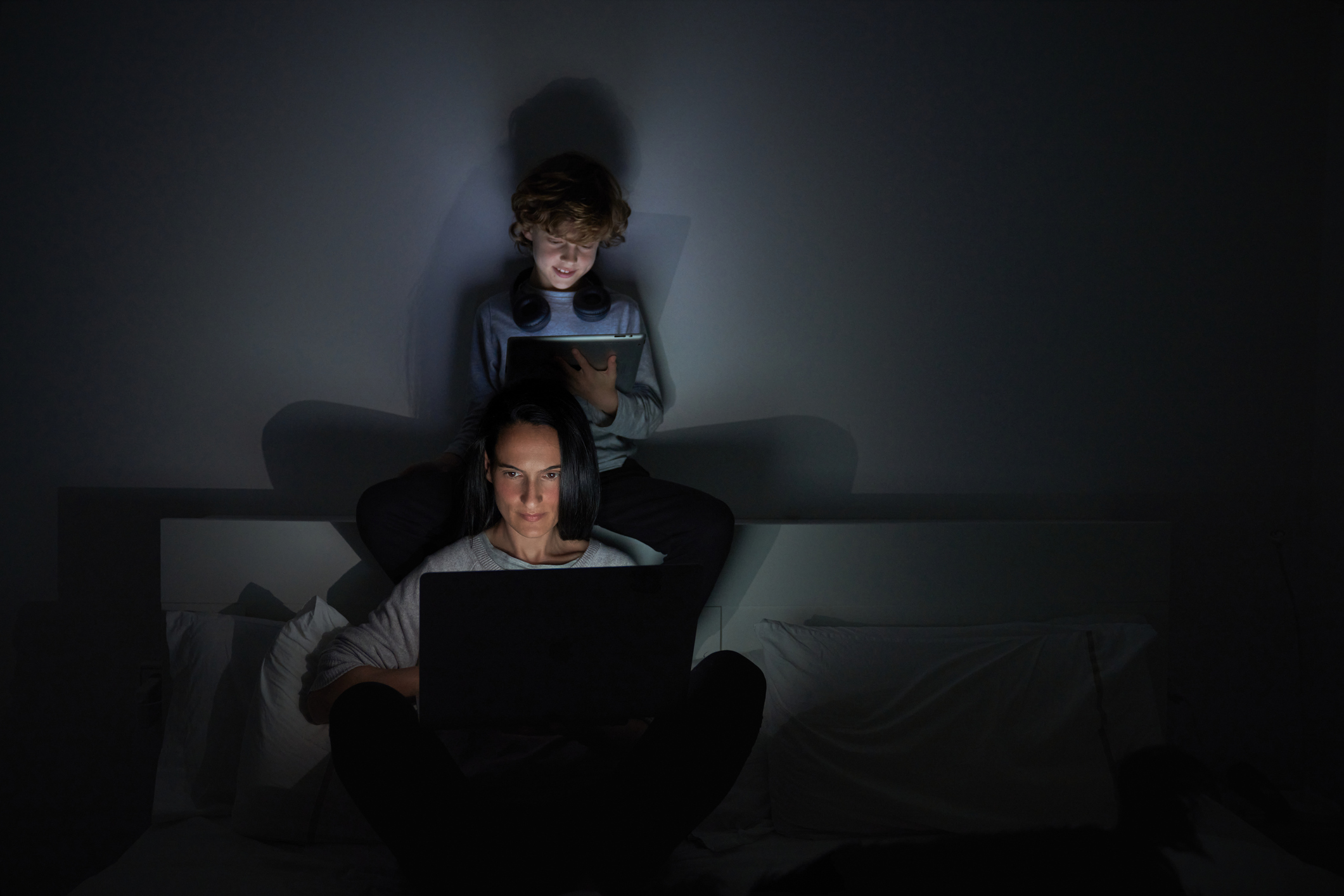
It’s 10:30 PM. The house is finally quiet, the kitchen is clean enough, and you are dead tired. You should go to sleep. Instead, you sit on the couch and stare at your phone for another forty-five minutes. You aren’t even looking at anything good. You’re just scrolling, too tired to enjoy it, but weirdly unwilling to put the phone down and go to bed.
There is a name for this: revenge bedtime procrastination, or revenge scrolling. It happens when your whole day belongs to other people. You spend twelve hours answering to your boss, your kids, the dog, and the laundry. By 9:00 PM, you haven’t had a single minute to yourself. So your brain pushes back. Going to sleep means waking up and doing it all over again tomorrow. Staying up late is the only way to claim a little bit of freedom, even if you pay for it the next morning.
When you see how strong that urge is in yourself, it changes how you look at your kids at night.
We get frustrated when we catch our kids on their phones or tablets past bedtime, or when they argue every single time we tell them to turn off a screen. It looks like defiance.
But think about what a kid’s day actually looks like. From the second they wake up, adults are managing their time. Sit here. Learn this. Eat that. Do your homework. Go to practice. Clean your room.
By the end of the day, they are tired of meeting expectations. They want the exact same thing we want: an hour where nobody is asking anything of them. When we walk into their room at night and order them to shut off the screen, we trigger a very normal human reflex to resist being controlled. They aren’t trying to make our lives difficult. They are just trying to hold onto the only free time they’ve had all day. You don’t need stricter rules to fix this, and you definitely don’t need another nightly argument. If you help everyone get a little autonomy earlier, bedtime gets much easier.
Say the quiet part out loud.
Stop treating late-night screen time like a moral failure. Tell your kid you get it. You can say something as simple as, “People have been telling you what to do since seven o’clock this morning. No wonder you don’t want the day to end.” When kids feel understood, they stop digging their heels in. You’re on the same side again.
Build in real downtime while the sun is still up.
We steal time at night because we didn’t get it during the day. Kids need a block of time after school where nobody is quizzing them, correcting them, or rushing them to the next thing. You need that, too! Take twenty minutes earlier in the evening to sit down and do whatever you want while you’re still awake enough to enjoy it. Leave the dishes in the sink. I promise, they will still be there tomorrow.
Sit down before you tell them to turn it off.
Avoid the urge to yell “screens off” from the hallway. Walk over, sit next to your child for two minutes, and ask about what they’re watching or playing. Actually care about the answer. Kids naturally resist orders when they feel disconnected from us. Two minutes of genuine warmth makes it much easier for them to hand over the device without a fight.
Make going to bed feel less abrupt.
Going straight from a bright screen to a dark room is tough on a tired brain. Give your kid something to look forward to after the screen goes off. Sit in the dark and talk for ten minutes. Listen to a podcast or an audiobook together. Read a chapter of a book out loud (even big kids usually like being read to, though they won’t admit it). And do something similar for yourself, like making a cup of decaf tea or reading a few pages of an actual book.
None of us need more discipline at 10:00 PM. Our kids don’t need it, and we don’t either. We just need a little space where nobody expects anything from us, and a way to take that break before midnight.
Breaking the screen time cycle doesn’t happen overnight. It’s messy. But if you lead with empathy, stay calm when the feelings get big, and prioritize your bond over the battle, you’ll find your way through. You’ve got this.
Follow Break the Cycle for a new tool every week, all year long.
Teens are pouring their hearts out to software. It happens on Snapchat. It happens on Character.ai. Every day, millions of kids trade secrets, fears, and late-n...
October 30 , 2026
If you take a phone away from a kid and give them nothing back, you get a fight. Most of us have learned this the hard way. We get tired of glowing screens duri...
October 19 , 2026
It's 10:30 PM. The house is finally quiet, the kitchen is clean enough, and you are dead tired. You should go to sleep. Instead, you sit on the couch and stare...
October 19 , 2026
More schools are asking kids to put their phones away from the first bell to the last, and we at Peace At Home understand why that stirs up mixed feelings. You'...
October 05 , 2026
Your almost-eighteen-year-old is still negotiating over screen time the same way they did in middle school: same eye roll, same "just five more minutes," same s...
September 22 , 2026
You've said it to your kid a hundred times: "Okay, five more minutes." You've said it to yourself, too, right before your phone somehow ate half an hour you did...
August 26 , 2026