
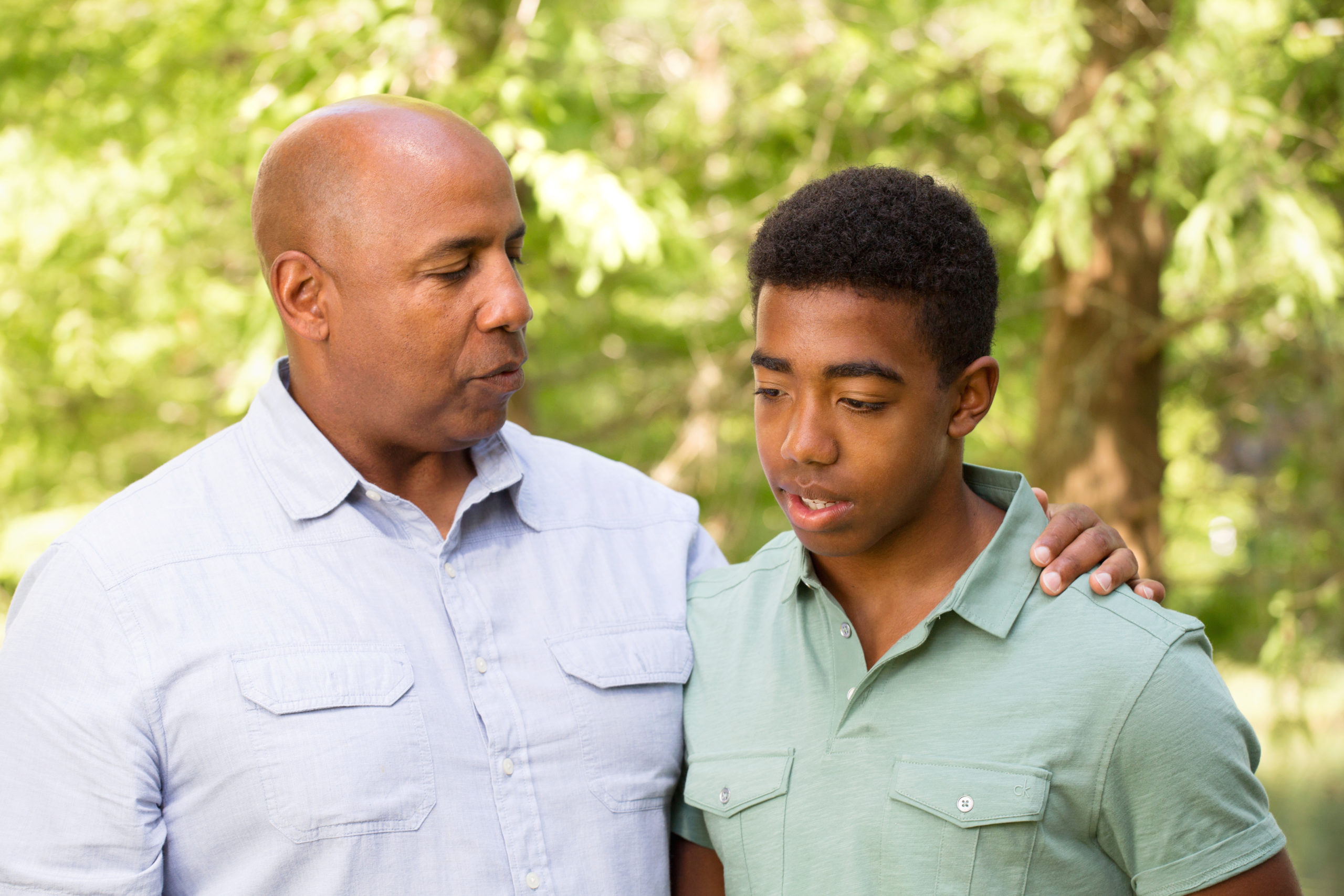
Father and son having a serious conversation.

7 Ways to Avoid Asking Your Kids 100 Times to Follow Directions

Peace at Home June 2017 | Ruth Freeman

A parent recently asked me how to stay calm when asking her child to do something 100 times. She made me laugh, but this question really deserves a complex answer – the entire theory behind how to win cooperation. But here is the simple answer.

  • Don’t ask your child to do anything more than two times.
  • Set kids up for success by having a daily routine that includes important tasks taking place at the same time on a regular basis – such as clearing up public spaces, putting away toys, preparing meals and getting ready for transitions (morning and evening routines, departing for sports or other outside activities). This might mean that 15 minutes before dinner each day is pick up time for the whole family – except the cook.
  • Try to organize more challenging tasks to take place before more pleasant activities and use the “When, Then” format. “When you get dressed and have your backpack ready, then we will sit down to breakfast together and I am looking forward to that!” “As soon as your room is picked up, we will go to the park.” “If your homework is done by 7:00 we can watch that TV show together.” And then refrain from nagging, coaxing and reminding. Allow natural consequences to occur. Use enthusiastic praise as soon as task is completed.
  • Consider family meetings to talk about weekly chores and plan fun times together. Use family meetings to address chronic challenges, come up with solutions as a team and rotate leadership of those meetings.
  • Make sure that you spend positive, fun time with your child every day, just enjoying time together. Fill up their attention bank – so they don’t have to use misbehavior to get attention.
  • When your child follows directions use effective praise – describe the behavior in positive words and express yourself enthusiastically.
  • Remember that compliance is not really an important measure of your success as a parent. It is often overrated and leads to too much parent-child conflict. You want a child with strong self-worth, confidence, compassion and curiosity. 100% compliance isn’t necessary for all that.

And perhaps most important, reflect on your own ability to manage stress. It is called self-regulation. Most parents want their kids to develop self-control but that only comes when kids can regulate their own internal stressors – self-regulation. And they learn that essential skill from our modeling and their relationship with us. If you are wired, reactive or overwhelmed, it will be difficult for your children to calm down enough to follow directions and more importantly to develop internal controls.  Learn ways to bring your brain back to calm and in the long run it will help your child’s capacity for following directions.

Get started with these Peace at Home Proven Solutions, or search for more.

Questions? Please email us at solutions@peaceathomeparenting.com.

TOPICS

Related Posts

Peace at Home

The Power of Doing Less: Simple Summer Traditions

June arrives and the social media feeds immediately flood with laminated bucket lists. Fifty things you absolutely must do before September. Bake a pie from scr...

Peace at HomeJune 30 , 2026
Peace at Home

Screen Time Counterweights: Building a Summer Boredom Plan

Summer is here. The familiar panic sets in right on schedule. The days stretch out forever and those digital screens are glowing brightly, begging for attention...

Peace at HomeJune 16 , 2026
Peace at Home

Beyond Behavior Charts: What Really Helps Kids with

There is so much pressure on parents right now. Pressure to get it right. Pressure to solve big challenges. Pressure to help children succeed, cope, achieve, re...

Peace at HomeJune 16 , 2026
Peace at Home

Strong Fathers, Connected Kids: How Your Past Shapes

Most of us go into fatherhood with a quiet, stubborn vow. I’m going to do this differently. Or maybe, I’m going to make sure my kids actually listen to me. We p...

Peace at HomeJune 08 , 2026
Peace at Home

Before You Blame Screens: Understanding Your Child's End-of-School

Before You Blame Screens: Understanding Your Child's End-of-School Emotional Surge  The first week of June is already behind us. The weather is finally tur...

Peace at HomeJune 08 , 2026
Peace at Home

How Does Parent Conflict Affect Your Children? 

Let’s Talk About What Every Parent Should Know Most of the parents we meet at Peace At Home think a lot about how you talk to your kids, discipline them, and su...

Peace at HomeJune 01 , 2026

Join our mailing lists for more parenting tips