
 June 2017 | Ruth Freeman
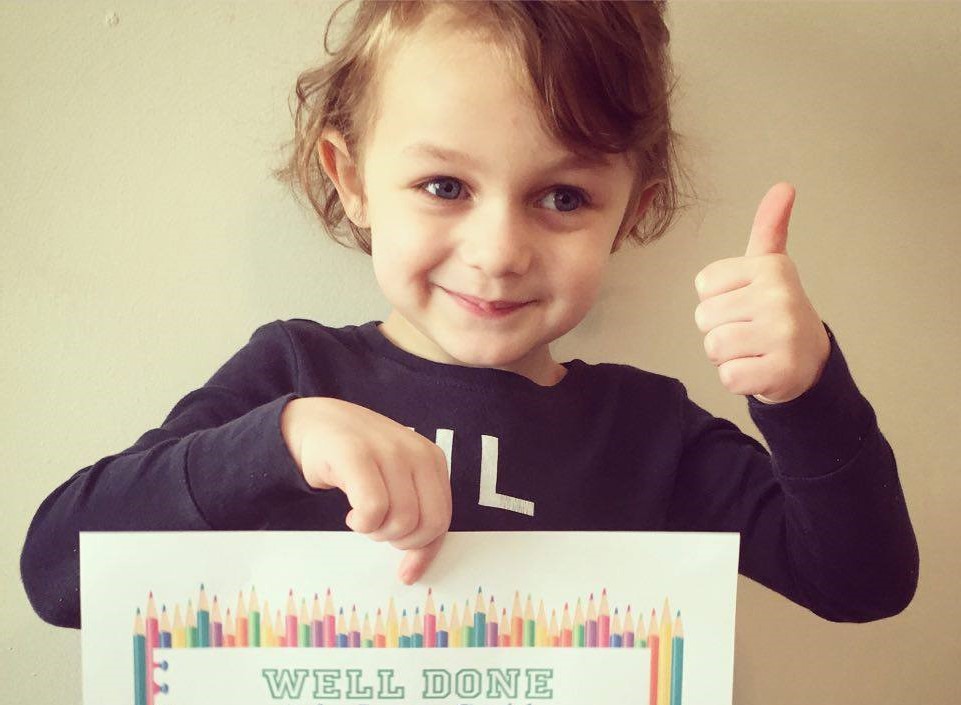
 There are actually helpful ways to praise children and ways that might produce “praise junkies.” You know – those kids who bring every drawing to you and say do you like it? Is it pretty? Those kids who can’t seem to be pleased with themselves without some kind of external pat on the back.
For the most part, praise about the child as a whole – you are so smart, you are so pretty, what a great kid you are – tends not to be so helpful and indeed, runs the risk of inspiring that praise junkie. Also those kinds of global adjectives about kids can create pressure for them to live up to these wondrous descriptions. It can actually feel stressful when mom says how terrific you are when just a few minutes ago you were mean to your little brother away from mom’s eyes. Those descriptions can cause stress since no one is always wonderful and can inspire a touch of perfectionism as well. Kids who are often told they are smart may not want to try things that don’t come easily. Of course there are moments when your kid accomplishes amazing feats and you just have to say, “What a terrific kid you are!” but be sparing with those accolades based on global adjectives.
So what kind of praise is useful? Actually there is considerable research on what is called “effective praise” and that is the kind of feedback that actually helps to decrease misbehavior and increase cooperation. A foundation of positive discipline, effective praise can change your relationship with your child. Identify 1 or 2 misbehaviors that you want to change, and then take off your misbehavior glasses and put on your positive behavior glasses. Let’s say you have a child who doesn’t follow directions. Every time your child follows directions, even partly (you ask them to get dressed and they put on their socks), you use effective praise. It has certain characteristics:
This is the kind of praise that has been identified by Dr. Alan Kazdin at the Yale Parenting Center and I have heard from parents that it not only increases cooperation but strengthens the parent-child relationship and calms the household down considerably. Your brain is built to notice negative behavior much more effectively than it notices positive behavior. Looking for the opposite of misbehavior will take effort for most us and actually change the way you think!
There is one circumstance in which you do want to use adjectives about your child to help shape positive behavior. One way to increase children’s compassionate or helping behavior is to describe them as kind or helpful. When trying to increase service to others, those words describing the child seem to strengthen prosocial behavior. Like this: “You’re such a good friend, Sarah, when you help Juan put away the blocks.” Or, “Sammy, you are such a kind big brother when you get the diaper for your baby sister.” Calling our children kind or generous or helpful will inspire them to be just that.
Some of us grew up with too much praise or too little so consider these simple reminders:
Remember, the way you speak to your children will become the way they talk to themselves when they grow up. And maybe take a little time to reflect on how that inner voice is functioning in your head as well!
Get started with these Peace at Home Proven Solutions, or search for more.
Questions? Please email us at solutions@peaceathomeparenting.com.
Post-pandemic family life has been dramatically impacted by the perfect storm of working parent burnout in combination with our national pediatric mental health...
May 20 , 2026
A few months ago, I was watching Oprah interview Dr. Anna Lembke, author of Dopamine Nation. I adore Oprah. So many decades ago she started talking about the ha...
May 19 , 2026
Every generation seems to hit a panic button when it comes to girlhood. From the novels of the 19th century to rock and roll in the 1950s, society has always wo...
May 11 , 2026
There’s a conversation I keep having with parents lately — in workshops, in consultation calls, in grocery store aisles, and honestly, in my own heart. Parents...
May 11 , 2026
This Mother’s Day, consider a gift that doesn’t fade after a day or two. What many moms really want is more connection and conversation, real moments with the p...
May 05 , 2026
Parenting is arguably the most beautiful, heart-stretching, and exhausting job in the world. If you sometimes feel lost in the thick of tantrums, defiance, sibl...
March 27 , 2026