
 October 2025 | Aaron Weintraub
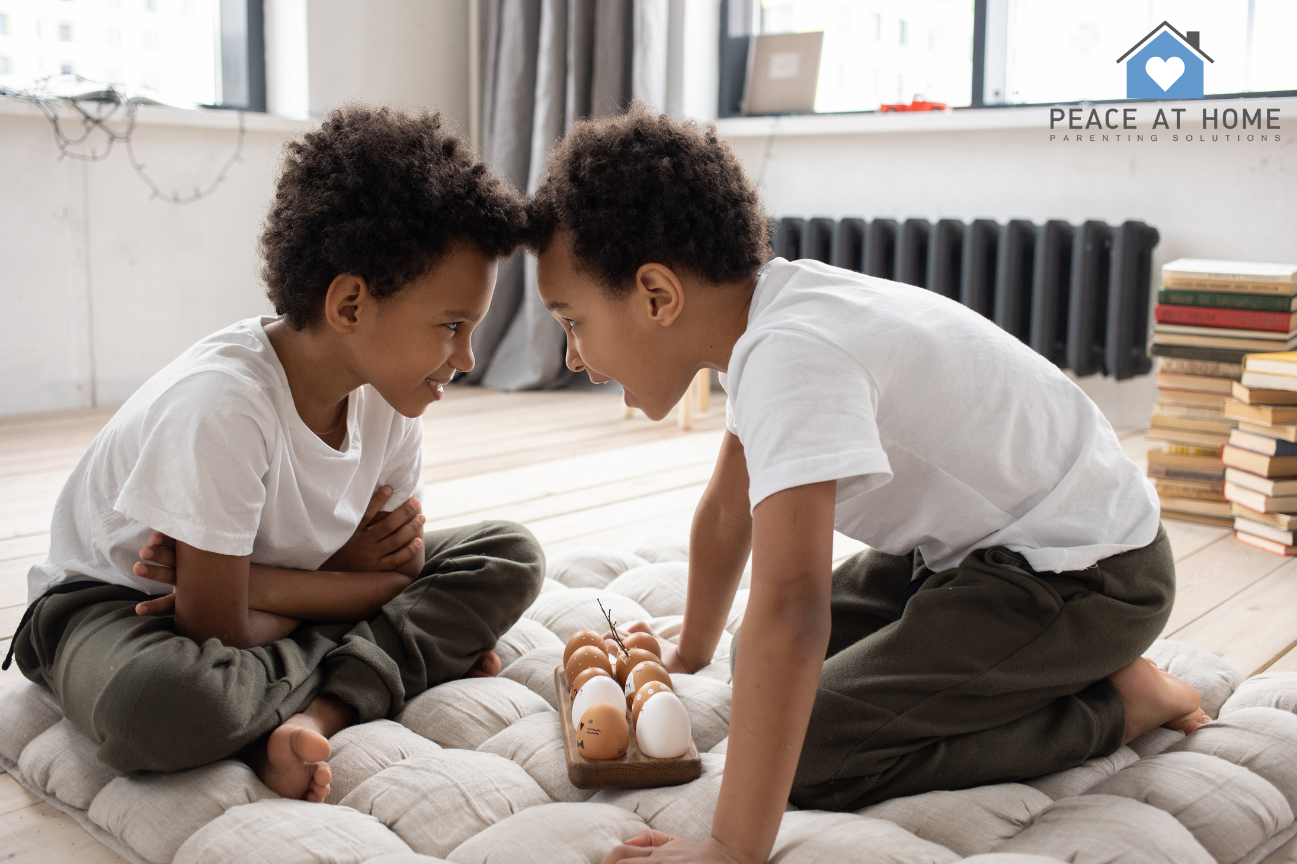
At Peace At Home Parenting, we believe sibling conflict is not only manageable—it can be a powerful opportunity to build emotional intelligence, teach cooperation, and strengthen family bonds.
Sibling dynamics help children learn how to relate to others, manage emotions, and resolve conflict. These early relationships act as templates for future friendships, romantic partnerships, and work collaborations. Research shows that close sibling relationships can increase resilience, reduce anxiety, and even improve academic outcomes.
Conflict often arises not because children dislike each other, but because they feel unseen or unsafe, particularly in emotionally charged moments. Triggers include transitions, miscommunication, or perceived favoritism. Misbehavior is often a child’s way of expressing unmet emotional needs.
For example, how to deal with jealousy in siblings properly is for parents recognizing that young children may not know how to handle conflict with their siblings. They benefit from parents showing them how to be an older sibling, manage conflict., and avoid sibling jealousy.
Avoid taking sides or assigning blame. Encourage cooperation by rewarding shared goals, like earning points toward a family movie night.
Let kids work through disagreements when possible. Step in only when there’s emotional or physical harm, or if children ask for support after trying on their own.
Predictable structure helps reduce conflict. Use routines for sharing, personal space, and responsibilities. This is especially effective when paired with natural consequences.
Notice and praise moments of kindness, sharing, and teamwork. Specific, enthusiastic feedback builds a positive family culture.
Even small differences in treatment can lead to resentment. Focus on individual fairness based on each child’s needs, not identical treatment.
Spending just 20 minutes of one-on-one time daily can decrease rivalry and increase cooperation. This focused attention models emotional availability and mutual respect.
Sibling aggression—whether physical, emotional, or psychological—should not be brushed off as normal. If conflicts include intimidation or ongoing harm, it’s time to intervene with a safety plan or consult a professional.
Supporting sibling relationships doesn’t mean eliminating conflict. It means guiding your children to develop empathy, communication skills, and resilience. With the right strategies, you can help them build a foundation of mutual respect and lifelong connection.
Questions? Email us at solutions@peaceathomeparenting.com
And now for the shameless plug…Don’t have a Peace at Home Parenting Portal? Let’s fix that. Ask your company, school, or favorite neighborhood group to join us. We have subscriptions for Corporations, K-12 Schools, and Family Service Organizations. We work to bring calm to parenting chaos.
You can also join as an individual or family.
Quick Summary: If your child won't listen without yelling, it's often a connection problem, not a behavior problem. Try "collecting" your child before giving di...
August 11 , 2026
Quick Summary: Two new studies link higher screen time to weaker academic performance, working memory, and well-being in kids. Screens alone don't determine a c...
August 04 , 2026
Quick Summary: Hours spent as the "director" of a virtual world flip the natural hierarchy kids need at home. When you ask them to step down and follow your lea...
July 21 , 2026
Quick Summary: Screens act as digital anesthesia, numbing loneliness, boredom, or rejection the moment a child feels it. But kids only build emotional resilienc...
July 21 , 2026
Quick Summary: When AI hands kids the final answer instantly, it skips the mental struggle that builds critical thinking, leaving them consumers of thoughts rat...
July 20 , 2026
Quick Summary Screens don't just waste time, they can quietly replace parents as a child's primary attachment figure. Kids have an instinctual need to attach to...
July 20 , 2026