
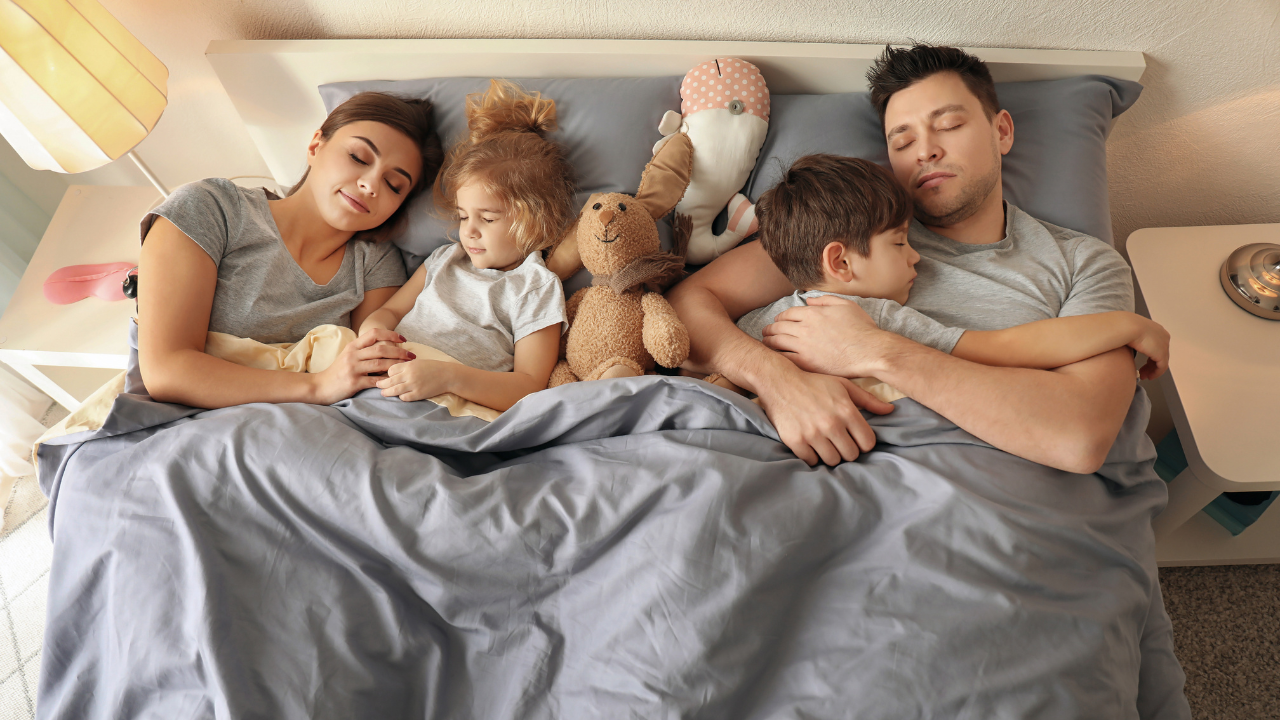
 January 2026 | Ruth Freeman
Bedtime shouldn’t feel like a nightly power struggle. Yet for many families, evenings are filled with stalling, tears, worries, and repeated wake-ups that leave everyone exhausted. The good news? Better sleep is possible—at any age—with the right strategies.
A consistent bedtime routine and the right sleep timing are crucial for kids. If your family is stuck in bedtime battles, the goal isn’t perfection—it’s predictability: a calming routine, age-appropriate sleep hours, and simple strategies that help kids fall asleep (and resettle) more independently.
To support families, Peace At Home Parenting Solutions is hosting an upcoming Lunch & Learn, “Take the Stress Out of Bedtime – Better Sleep for Families,” where parenting and sleep experts will share practical tools for calmer nights.
Below are 7 proven tips—drawn directly from our expert-led sleep programs—to help you get started today.
A predictable bedtime routine helps children feel safe, calm, and ready for sleep. Research shows children with routines:
Keep routines short, calm, and predictable, and move in one direction—ending in your child’s sleep space. Even school-age children benefit from this structure.

If your child isn’t tired at bedtime, the issue may be timing, not behavior. Using a strategy called bedtime fading, parents temporarily adjust bedtime to align with their child‘’’s natural bedtime, then gradually move it earlier.
This approach reduces bedtime battles and helps children fall asleep independently.
Children wake naturally during the night. The key is whether they can return to sleep. When kids learn to fall asleep independently at bedtime, night wakings become shorter and less disruptive.
It’s never “too late” to teach this skill—even for older children.
Night wakings are a normal part of sleep cycles, especially for younger children. What matters most is how bedtime begins. Use the same brief, boring response each time so you don’t accidentally ‘train’ longer wake-ups.

Many children experience nighttime fears related to school, friendships, news, or imagination. Instead of tackling worries at bedtime, schedule “worry time” during the day to talk things through.
Daytime practice—like breathing, self-talk, or confidence-building activities—helps children feel calmer and more capable at night.
For toddlers and preschoolers, naps are essential—but poorly timed or overly long naps can sabotage bedtime. Adjusting nap length or timing can dramatically reduce bedtime resistance.
There’s no one-size-fits-all sleep solution. The most effective plan is one that aligns with your child’s temperament, your family values, and your ability to stay consistent.
That’s exactly what we explore in our expert-led workshops—helping parents choose realistic, compassionate strategies that actually stick.
Sleep is health. It’s when a child’s brain and body do essential “maintenance” work—consolidating learning and memory, regulating emotions, supporting physical growth, and strengthening the immune system.
Consistent sleep also helps children manage stress, pay attention, and handle frustration with more flexibility. When sleep is short or irregular, bedtime battles and daytime behavior struggles often get worse, not better.
| Age Group | Recommended Sleep (per 24 hours) |
| Infants (4–12 months) | 12–16 hours (including naps) |
| Toddlers (1–2 years) | 11–14 hours (including naps) |
| Preschool (3–5 years) | 10–13 hours (including naps) |
| School-age (6–12 years) | 9–12 hours |
| Teens (13–18 years) | 8–10 hours |
Note: Sleep needs vary by child, but these ranges are widely used clinical guidelines from pediatric sleep experts. Use them as a practical benchmark—then adjust based on your child’s daytime functioning (mood, attention, energy, and behavior) and your family’s routine.
If bedtime battles are a nightly theme, screens can quietly make them worse—especially when kids go straight from fast, stimulating content to “lights out.” The American Academy of Pediatrics (AAP) recommends turning screens off at least 60 minutes before bedtime and keeping devices out of bedrooms at night when possible to break that dopamine loop.
Here’s a simple, repeatable plan:
Pro tip: If your child struggles with transitions, use a timer and a consistent phrase: “Screens off in five minutes—then we start our power-down routine.”
Learn More:
How much sleep does my child need by age?
Most kids do best within expert-recommended sleep ranges for their age. If mood, focus, or behavior is slipping, it’s a sign sleep may need attention.
What is bedtime fading—and does it work?
Bedtime fading is a strategy that temporarily shifts bedtime later to match when your child naturally falls asleep, then gradually moves bedtime earlier once sleep comes more easily.
Why does my child fight bedtime even when they’re tired?
Overtired kids often get a “second wind.” Their bodies feel exhausted, but their brains become more reactive—making transitions harder and emotions bigger.
What should I do if my child wakes up at night?
Night waking is common. Try to keep responses calm and consistent so your child learns that nighttime is for sleeping. If wakes are frequent or disruptive, it may help to look at timing, routines, anxiety, or sleep environment.
Do screens before bed really affect sleep?
They can. Screens often increase stimulation and delay the brain’s wind-down process, which is why the AAP advises screens off at least 60 minutes before bedtime.
When should I talk to a pediatrician about sleep?
If sleep issues are persistent, severe, linked to daytime impairment, or you’re worried about your child’s health or mood, it’s wise to consult your pediatrician for personalized guidance.
Note: This article provides general parenting education and is not medical advice. If sleep issues are severe or persistent, consult your child’s pediatrician.

Most bedtime challenges improve with a consistent routine and calm, predictable boundaries. But it’s smart to get extra support if sleep problems are persistent, escalating, or impacting your child’s daytime functioning—mood, behavior, school performance, or your family’s well-being. In those cases, consider talking with your pediatrician and/or a qualified parenting professional for guidance tailored to your child.
If you want structured help without guesswork, Peace at Home can support families with:
The goal isn’t a “perfect sleeper.” It’s helping your child build calm routines, confidence, and healthy sleep skills—so nights feel more peaceful for everyone.
Peace at Home is offered through employers, schools, and family service organizations. If you’re a parent and want access, share Peace at Home with your HR/Benefits team, manager, or parent ERG, and ask them to add it to your employee benefits support or wellness package.
Take better sleep back for your kids and family and watch a recorded discussion:
“Take the Stress Out of Bedtime – Better Sleep for Families.”
You’ll get expert guidance on:
Better sleep is possible—and it starts with the right support. Learn more about Peace at Home Parenting Solutions today!

We often hear that parenting is the most beautiful, exhausting job in the world. But let’s be honest about the "exhausting" part for a moment. When you’re in th...
February 01 , 2026
If you’re searching for screen time tips on how to reduce screen time for kids without conflict, you’re not alone. Many parents tell us the hardest part isn’t j...
January 26 , 2026
Bedtime shouldn’t feel like a nightly power struggle. Yet for many families, evenings are filled with stalling, tears, worries, and repeated wake-ups that leave...
January 14 , 2026
Screen-time meltdowns aren’t just 'bad behavior'—they are often driven by a powerful and addictive dopamine loop cycle. Curious? In a dopamine loop, your child’...
January 12 , 2026
You are your child’s first teacher. This is why establishing positive routines for your toddler is crucial. Together you and your child will learn what is neede...
January 07 , 2026
Dr. Martin Luther King Jr.’s values—nonviolence, empathy, courage, and service—can be taught to our kids through everyday parenting. This guide turns MLK’s big...
January 06 , 2026