
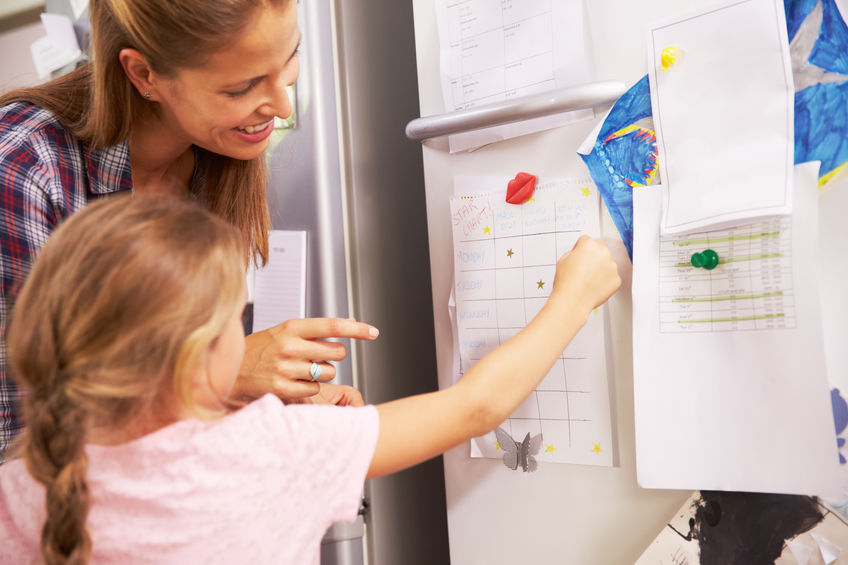
Mother And Daughter Putting Star On Reward Chart

What can I do besides giving a timeout? 5 Positive Ways to Discipline Your Kids

Peace at Home November 2017 | Ruth Freeman

As a parent, you know how frustrating it feels when you can’t get your kids to stop misbehaving. No matter how many times you have tried to get them to settle down, they just don’t seem to want to listen. Punishment may seem like the easier solution but there are other, more positive ways a parent can get their child to cooperate that don’t involve the timeout chair. And you may have already noticed – punishment doesn’t improve behavior in the long run. By Ashley Maturo.

  • Connect before Correcting: Building a positive relationship with your child is more likely to influence good behavior. Spending warm and constructive time together can help a child feel closer to you. In turn, your child will not feel a need to misbehave in order to gain your attention. Try to spend at least 20 minutes each day connecting with your child. Do something you both enjoy, one-one-one, with no technology and no interruptions.
  • Promote Self-Control: Modeling control over your own behavior will help you child do it for himself. Teach yourself to calm down before reacting to your child’s misbehavior. If you get angry and yell, you are displaying a lack of control when overwhelmed. Pay attention to how you act, talk and behave in front of your children. A child can’t calm down if she never learns how to!
  • Listen and Understand How Your Child is Feeling: By recognizing how your child feels, you are helping him identify his own emotions. Sometimes your child just wants to know that you understand him, but it may be expressed in misbehavior. Calmly saying, “It looks like your feeling angry, sad, etc.” may immediately calm your child down and help him express his emotions in words instead of tantrums. If you can’t tell how your child feels, just ask him.
  • Create a Set of Clear Rules: A child won’t know she is breaking the rules if no rules were made in the first place. When you throw new restrictions on your child, it can be confusing for her. Creating a list of Dos and Don’ts, especially with your child’s input can be beneficial for a child to learn their limits. Sit down as a family and write down the rules of the house and the consequences for not following them. When anyone (including you) breaks a rule, calmly enforce the agreed upon consequence. You can revisit the list of rules as time goes by an adjust as needed for your family. Keep them simple and positive.
  • Recognize the Reasons behind the Behavior: It becomes a lot easier to figure out how to discipline your child once you figure out the reasons behind his misbehavior. Is he tired or hungry? Is he upset about something at school? Does he simply want your attention, because he hasn’t received any today? Try to identify possible reasons for your child’s behavior, before assuming anything.

Looking for More Support?

Questions? Email us at solutions@peaceathomeparenting.com

And now for the shameless plug…
Don’t have a Peace at Home Parenting Portal? Let’s fix that. Ask your company, school, or favorite neighborhood group to join us. We’ve got CorporateK-12 School, and Family Service programs that bring calm to the chaos—no yoga mat required. Click here to join as an individual or family.
TOPICS

Related Posts

Peace at Home

7 Common Parenting Challenges (And What Your Child’s

Parenting is arguably the most beautiful, heart-stretching, and exhausting job in the world. If you sometimes feel lost in the thick of tantrums, defiance, sibl...

Peace at HomeMarch 27 , 2026
Peace at Home

The 30-Day “Break the Screen Cycle” Family Challenge

Simple Daily Steps to Reduce Screen Time and Rebuild Family Connection Many parents feel stuck in the same exhausting pattern: screens are always within reach,...

Peace at HomeMarch 26 , 2026
Peace at Home

Supporting Student Success Starts at Home: Why Schools

Educators know that student success depends on more than what happens in the classroom. The relationship between schools and families plays a critical role in c...

Peace at HomeMarch 17 , 2026
Peace at Home

Emotional Overload in Families: 10 Microstrategies That Reduce

Between work responsibilities, school schedules, digital distractions, and daily responsibilities, many parents feel emotionally stretched thin. This experience...

Peace at HomeMarch 12 , 2026
Peace at Home

Strengthening Families to Strengthen the Workforce

Employee well-being has become a strategic priority for organizations seeking to attract, retain, and support a thriving workforce. Many companies have expanded...

Peace at HomeMarch 11 , 2026
Peace at Home

Supporting Parents to Strengthen College Student Mental Health:

For colleges and universities grappling with rising student mental health needs, supporting parents may be one of the most underutilized and cost-effective stra...

Peace at HomeMarch 11 , 2026

Join our mailing lists for more parenting tips