
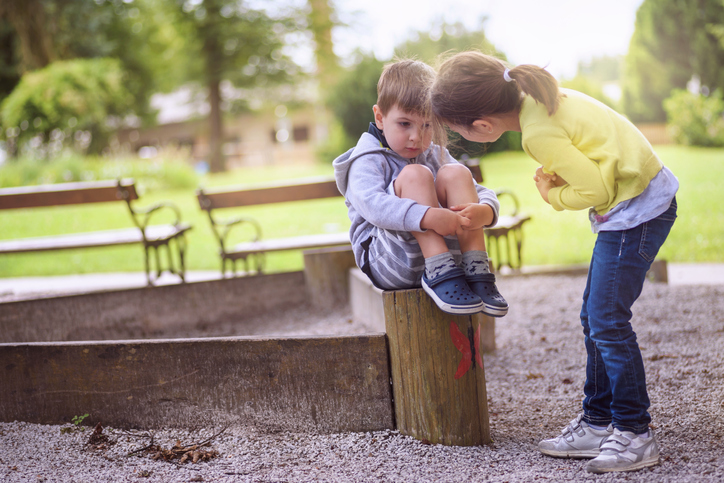
Girl Supporting Sad Boy Sitting Alone, Navigating Your Child’s Concerns about Their Friend’s Mental Health

Navigating Your Child’s Concerns about Their Friend’s Mental Health

Peace at Home January 2024 | Ruth Freeman

When your child comes to you with concerns about a friend’s mental health, you are in a position to be helpful to both your child and their friend. But you may also feel overwhelmed by the responsibility you suddenly feel. You might feel the urge to rescue your child’s friend and perhaps even your child. Just notice the urge and resist it unless there’s actually an emergency. 

Here are some helpful ways to respond when your child opens up about a friend’s mental health issues.

  • Listen without judgment or solutions. When your child confides in you about a friend’s mental health, the first and most crucial step is to listen attentively. Create a safe space for your child to express their feelings and concerns without judgment. Use reflective listening: “Sounds like you’re really worried about your friend.” Avoid jumping to conclusions or offering immediate solutions. Sometimes, a listening ear is the most valuable support you can provide.
  • Ask both specific and open-ended questions. Be open and curious. Encourage your child to share more details about their friend’s situation by asking open-ended questions. This can help you better understand the nature and severity of the mental health issue. Questions like “How long have they been feeling this way?” or “Have they spoken to someone about it?” can provide valuable insights. If your child declares that their friend is severely anxious or depressed or displaying another mental health symptom, you can say, “Help me understand why you think they have extreme anxiety. “ Invite your child to think things through: “Tell me more about that.”
  • Validate your child’s emotions and emphasize the need for adults to help. It’s essential to acknowledge and validate your child’s emotions. Let them know that it’s okay to feel concerned: “It seems like you care deeply about your friend and really want to help.” Reassure your child that they are not responsible for fixing their friend’s problems. Emphasize the importance of supporting and encouraging their friend to seek help from a trusted adult or mental health professional.
  • Educate your child about mental health. Address common stigmas and misunderstandings about mental health emphasizing that seeking help is a sign of strength, not weakness. Provide age-appropriate information on common mental health conditions and the various ways people can receive support. Let your child know that about 20% of the population has a mental health diagnosis and that getting treatment usually improves symptoms so people can lead fulfilling lives.
  • Encourage open communication. Foster an environment where your child feels comfortable discussing difficult topics with you. Let them know that they can come to you with any concerns, and emphasize the importance of open communication. This will strengthen your relationship and make it easier for your child to approach you in the future. In this case, let your child know that you appreciate their honesty and that they trust you to help. 
  • Suggest seeking adult help. Gently guide your child in encouraging their friend to speak with a trusted adult, such as a parent, teacher, school counselor, or another responsible figure. Emphasize that mental health concerns are serious and often require professional assistance. Offer to help your child communicate with their friend about seeking help.
  • Involve School Resources. If the friend attends the same school, suggest involving school resources. School counselors can provide valuable support and connect the friend with the necessary resources. You may want to communicate with the school, ensuring they are aware of the situation and can take appropriate steps to assist the student.

If your child is reporting that their friend has said that they want to harm themselves or others, it is best to take immediate action. Explain to your child that it isn’t about breaking a confidence, it’s about being a good friend and helping them stay safe. Remind your child that self-harm or suicidal thoughts are not usually about wanting to be dead, but more about wanting to end their suffering. Let your child know that good treatment can help with exactly that. If there is imminent danger, call 911 and let them know about the situation. If not, you may want to call the child’s parents and let them know about the National Suicide/Crisis Hotline at 988 or call your child’s school and ask them for guidance in helping your child’s friend. 

By actively listening, providing emotional support, and guiding your child on how to encourage their friend to seek help, you play a vital role in fostering a culture of empathy and support. Together, you and your child can contribute to creating a compassionate community where mental health is prioritized and no one feels alone in their struggles.

Find the approaches that feel right to you and your family but keep in mind that being forced to say thank you or write a note or pointing out how much more “fortunate” your child is than others will not create the authentic grateful approach to life that you wish for your child. 

Looking for More Support?

Questions? Email us at solutions@peaceathomeparenting.com

And now for the shameless plug…
Don’t have a Peace at Home Parenting Portal? Let’s fix that. Ask your company, school, or favorite neighborhood group to join us. We’ve got CorporateK-12 School, and Family Service programs that bring calm to the chaos—no yoga mat required. Click here to join as an individual or family.

TOPICS

Related Posts

Peace at Home

Raising Connected Boys: Building the Bond Your Son

If you are raising a boy today, you might sometimes feel the weight of the world on your shoulders. We see the headlines, and they can be scary. We know that bo...

Peace at HomeFebruary 20 , 2026
Peace at Home

Breaking the Screen Time Cycle: Connect to UnPlug

It’s About Connection, Not Just Control If there is one topic that seems to instantly raise the blood pressure in almost every home we work with, it’s screen ti...

Peace at HomeFebruary 13 , 2026
Peace at Home

How Employee Resource Groups Help Working Parents—and How

Sixty-six percent of working parents are experiencing parental burnout—chronic stress and exhaustion that undermines their wellbeing, performance, and ability t...

Peace at HomeFebruary 11 , 2026
Peace at Home

Guiding Your Daughter Through the Storm: Being Her

We are trying to guide our daughters through a complicated world, and sometimes it feels like the ground is constantly shifting beneath our feet. If you’ve been...

Peace at HomeFebruary 06 , 2026
Peace at Home

Stop Keeping Score: How to Move From Resentment

We often hear that parenting is the most beautiful, exhausting job in the world. But let’s be honest about the "exhausting" part for a moment. When you’re in th...

Peace at HomeFebruary 01 , 2026
Peace at Home

Screen Time Tips: Why Screen Time Battles Happen

If you’re searching for screen time tips on how to reduce screen time for kids without conflict, you’re not alone. Many parents tell us the hardest part isn’t j...

Peace at HomeJanuary 26 , 2026

Join our mailing lists for more parenting tips